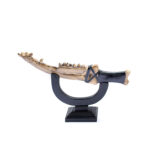
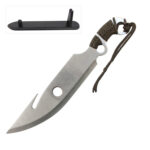
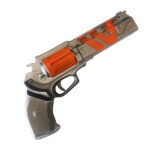
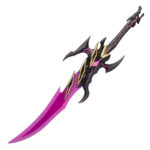
One sword hangs on the wall like it was pulled from a king’s armory. Another looks like it was forged for a dragon-slayer under a blood-red moon. That gap is exactly where high fantasy vs medieval fantasy gets interesting. For collectors, cosplayers, and gamers, the difference is not just academic – it changes the entire vibe of a weapon, a character, and a collection.
A lot of fans use the terms interchangeably, and that makes sense at a glance. Both styles can feature castles, armored warriors, horseback travel, and blades that look right at home in a throne room or on a battlefield. But once you get past the surface, high fantasy and medieval fantasy are aiming at very different experiences.
High fantasy vs medieval fantasy: the core difference
The cleanest way to separate them is this: high fantasy builds a world that feels fully removed from our own, while medieval fantasy leans much harder on the look, social structure, and material culture of the historical Middle Ages. One pushes mythic scale. The other pulls from real-world medieval texture.
High fantasy usually comes with original maps, invented races, ancient prophecies, magical orders, legendary artifacts, and conflicts that can decide the fate of entire worlds. The sword in high fantasy is rarely just a sword. It is the lost blade of a fallen house, a relic tied to destiny, or a weapon carrying enchantments, symbolism, and lore.
Medieval fantasy can still include magic, monsters, and invented kingdoms, but its grounding tends to feel more historical. Armor looks heavier and more practical. Politics matter. Travel feels slow. Warfare feels brutal. Weapons often look like they could have existed in a real armory, even when the story bends reality around them.
That distinction matters if you collect display pieces. A high fantasy blade often wins on spectacle. A medieval fantasy sword usually wins on realism, restraint, and that classic steel-and-heraldry appeal.
What high fantasy usually looks like
High fantasy goes big, and it does not apologize for it. This is the territory of chosen heroes, ancient evil, godlike magic, mythical creatures, and weapons designed to look legendary before they ever leave the scabbard. If a sword seems built for a final boss fight, there is a good chance you are in high fantasy territory.
Visually, high fantasy weapons tend to be more dramatic. You will see oversized profiles, ornate guards, glowing runes, unusual blade geometry, fantasy metals, jewel-toned accents, and iconography tied to kingdoms, bloodlines, or magical factions. These designs are made to command attention on screen, in game art, and on your wall mount.
That said, high fantasy is not always huge and flashy. Some worlds use elegant, almost sacred-looking weapon design instead of brute-force excess. The common thread is not size. It is distance from realism. The farther a weapon moves from what a historical smith would likely make, the more comfortably it sits in high fantasy.
For fans, that makes high fantasy especially collectible. These weapons often feel like character pieces first and battlefield tools second. They carry lore. They signal allegiance. They look like they belong to heroes, villains, elves, dark lords, royal guardians, or ancient champions.
What medieval fantasy usually looks like
Medieval fantasy starts with a stronger historical backbone. Think feudal politics, stone keeps, banners, chainmail, longswords, arming swords, axes, and warfare shaped by logistics instead of pure magic. Even when dragons or sorcery show up, the world still feels close enough to medieval Europe that you can recognize the structure underneath.
In medieval fantasy, weapons are often more believable in proportion and function. Blades look balanced. Grips look usable. Scabbards, shields, and armor feel tied to actual combat needs instead of pure visual drama. That practical look is a big part of the appeal.
For collectors, medieval fantasy has a different kind of power. It feels grounded, battle-worn, and serious. A display piece inspired by medieval fantasy often works because it looks like something a knight, mercenary, or castle guard could really carry. The fantasy element might come through the setting, the symbols, or a slight stylization rather than full-blown magical excess.
This style also tends to attract fans who like gritty worldbuilding. If you enjoy stories where power comes from armies, bloodlines, betrayal, and steel rather than destiny and cosmic magic, medieval fantasy is probably your lane.
High fantasy vs medieval fantasy in weapons and armor
For Pocket Blade shoppers, this is where the difference becomes easy to spot.
A high fantasy weapon is usually designed to impress first. It may feature exaggerated length, fantasy engravings, creature motifs, glowing details, curved silhouettes, or impossible materials. It feels cinematic. It wants to be noticed from across the room. It is the kind of piece that instantly says main character, raid boss, or ancient relic.
A medieval fantasy weapon tends to work through authenticity cues. Cleaner lines. More traditional crossguards. Fuller grooves. Leather-wrapped grips. Heraldic symbols instead of mystical overload. Even when stylized, it usually respects the silhouette of real historical weapons.
Armor follows the same pattern. High fantasy armor can be sculpted, ceremonial, spiked, rune-covered, and built to project power or status. Medieval fantasy armor usually looks heavier, more practical, and more lived in. One says legend. The other says campaign season.
Neither is better. It depends on what you want your collection to say. If your shelf is built around epic heroes, magical kingdoms, and game-inspired spectacle, high fantasy hits hard. If you want your display to feel like an armory from a grim fortress or war-torn realm, medieval fantasy delivers that steel-first energy.
Why fans mix them up
The overlap is real. Many franchises blend both styles. A world may use medieval castles, feudal politics, and realistic swords, then add ancient magic, mythical bloodlines, and world-ending prophecy. That is why the line can feel blurry.
The easiest mistake is assuming that any fantasy with swords and castles must be medieval fantasy. Not quite. If the setting is heavily mythic, detached from history, and loaded with magical systems and legendary weapon lore, it is probably leaning high fantasy even if the architecture looks medieval.
The reverse happens too. Some stories include monsters or magic but still feel deeply medieval fantasy because the world remains grounded in realistic hardship, social hierarchy, and practical warfare. Magic exists, but it does not dominate the identity of the setting.
So the answer is often not either-or. It is where the emphasis lands.
Which style is better for collecting and cosplay?
If your goal is maximum visual impact, high fantasy has a natural advantage. These pieces are made for display culture. They look incredible in photos, at conventions, and as centerpiece items in a collection. If you want a blade that feels iconic, dramatic, and instantly fandom-coded, high fantasy usually gives you more to work with.
If your goal is a grounded, knightly, battle-ready aesthetic, medieval fantasy is hard to beat. It feels timeless. It pairs well with armor displays, rustic interiors, historical-inspired cosplay, and collectors who want the fantasy look without going full magical artifact.
There is also a practical collector truth here: some fans start with medieval fantasy because it feels classic, then move into high fantasy because the designs get wilder and more character-specific. Others do the opposite. They begin with flashy hero blades, then start craving cleaner, more realistic pieces that age well in a long-term collection.
That is the fun of it. Your shelf does not have to choose one kingdom.
How to tell what you are really looking at
When you see a fantasy weapon or costume piece, ask a few simple questions. Does it look like a real-world craft tradition could have produced it? Does the world around it seem structured by medieval life, or by myth and magical destiny? Is the design trying to sell realism, or legend?
If the answer is realism with a fantasy edge, you are probably looking at medieval fantasy. If the answer is legend first, realism second, that is high fantasy.
For collectors, that lens makes shopping easier. It helps you build a display with a clear identity instead of a pile of cool-but-random pieces. Maybe you want a wall that looks like a royal armory. Maybe you want a lineup of blades worthy of dragon hunts, cursed kings, and final battles. Both work. They just tell different stories.
And if you like both, own that. The best collections are not always the most rigid. They are the ones with personality. A grounded medieval-style sword beside a more ornate high fantasy blade can actually make both pieces look stronger.
Whether you lean toward realism or pure legend, the right piece should feel like it belongs in your world the second you see it. That is the one worth making space for.