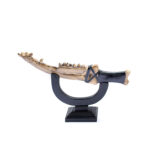
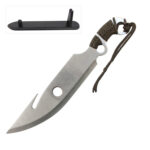
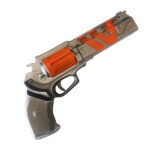
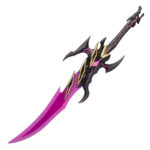
You can swing a foam sword at a convention, hand one to a young cosplay fan, or use one for light backyard roleplay – and still end up asking the same thing: are foam swords safe? The short answer is usually yes, but only when the sword matches the situation. A display-grade foam replica, a kid-friendly toy sword, and a LARP weapon might all look similar at a glance, yet they are built for very different kinds of use.
That difference matters more than most people realize. Foam does not automatically mean harmless. Some foam swords are soft and forgiving, while others have rigid inner cores, denser outer material, sharp-looking edges, or hard tips that can still hurt if used carelessly. If you are buying for cosplay, gifting, collecting, or light play, safety comes down to construction, supervision, and using the right prop for the right scene.
Are foam swords safe for everyday use?
For most casual uses, foam swords are one of the safer options in the replica world. They are lighter than metal, generally softer on impact, and far less likely to cause serious injury during light contact. That is exactly why they are popular with cosplay fans, younger collectors, and anyone who wants the look of an iconic blade without the weight and risk of a hard replica.
Still, everyday use is a wide category. A foam sword carried as part of a convention outfit is not facing the same stress as one used in mock battles. A wall display piece that only gets picked up for photos has a much easier life than a foam weapon used repeatedly for sparring. If your goal is safe costume wear, foam is often a smart choice. If your goal is regular impact play, you need to check the build much more carefully.
The biggest mistake people make is treating all foam swords as interchangeable. They are not. Some are designed mainly for appearance, with bold detailing and franchise-inspired shapes that look incredible in photos. Others are specifically made for safer contact. The more realistic and rigid the piece, the less you should assume it is suitable for rough play.
What actually makes a foam sword safe?
Safety starts with materials. Most foam swords use a foam exterior over some kind of internal support. That support may be flexible, semi-rigid, or fairly stiff depending on the product. A softer blade with more give is usually better for light play. A thicker foam layer also helps absorb impact better than a thin shell wrapped around a hard core.
Tip design matters too. A rounded, padded tip is far safer than a narrow or pointed one, even if the entire sword is technically made from foam. Eye and face injuries are one of the main risks with any prop weapon, so the tip deserves extra attention.
Handle construction is another detail buyers overlook. If the grip is too slick, too short, or poorly balanced, the sword is easier to lose control of during a swing. A lightweight sword that slips out of the hand can become more dangerous than a slightly heavier one with a secure grip.
Then there is durability. A foam sword in good condition is much safer than one with tears, exposed core material, or loose parts. Once the outer foam starts breaking down, the sword is no longer behaving the way it was meant to. That is when even light use can become a problem.
Soft foam vs. core-supported foam
This is where the trade-off shows up. Very soft foam swords are usually safer on impact, but they may bend more, wear out faster, or look less accurate. Core-supported foam swords often have better shape retention and a more impressive silhouette, which makes them great for cosplay and display, but they may not be ideal for full-contact use unless they were built specifically for that purpose.
If you want something that looks close to your favorite anime or game weapon, a firmer foam sword can be the sweet spot for appearance. If you want a prop for repeated safe contact, purpose-built combat foam is the better lane.
Are foam swords safe for kids?
They can be, but age and behavior matter. A foam sword is generally a better pick for kids than a wooden, bamboo, or metal alternative. That said, “safe for kids” does not mean “safe without supervision.” Children can still hit too hard, aim at the face, trip while running, or use the sword around fragile furniture, pets, or other hazards.
For younger kids, look for shorter swords with softer foam and no hard decorative pieces. Avoid anything with a sharp-looking point, dense internal rod, or detachable parts. It also helps to set simple rules from the start: no face shots, no swinging near bystanders, and no use on stairs or around breakable items.
For older kids and teens, the biggest issue is usually confidence. Once a foam sword looks realistic, it is easy to treat it like battle gear instead of a prop. That is when horseplay ramps up and safety drops. A cool fandom piece is still not a free pass for uncontrolled sparring.
Foam swords for cosplay, conventions, and display
This is where foam shines. If your main goal is to complete a costume, carry a convention-friendly prop, or build out a display that looks straight out of your favorite series, foam swords are often the easiest win. They are lighter to carry, easier to pose with, and more event-friendly than metal replicas.
Convention safety rules vary, but foam is commonly seen as one of the safer prop categories because it reduces the risk of injury in crowded spaces. Even then, event approval is not guaranteed. Some conventions inspect props based on core material, overall size, edge shape, or whether the item appears too realistic from a distance. Always check the event rules before you show up with a giant hero blade on your back.
For display, the safety concern shifts. You are no longer asking whether the sword is safe to swing. You are asking whether it is safe to store, mount, and handle occasionally. In that case, foam offers a lower-risk collectible option, especially for fans who want the visual impact of oversized fantasy weapons without hanging a heavy hard replica on the wall.
When foam swords are not safe
Foam swords stop being a safe choice the moment people use them outside their intended purpose. A cosplay prop used for hard sparring is a bad idea. A damaged foam sword with exposed inner support is a bad idea. A long oversized foam blade used in a crowded room is also a bad idea, even if the material itself is soft.
There is also a difference between “less dangerous” and “safe enough for anything.” Foam can still cause bruises, welts, and accidental eye injuries. The risk goes up fast when swings are full-force, when the sword has a rigid core, or when players are not wearing any protective gear during contact games.
Weather can even play a role. Some foam materials become stiffer in cold conditions or degrade faster with heavy heat and sun exposure. A sword that felt forgiving last month may not perform the same way after rough storage in a garage or car trunk.
How to choose a safer foam sword
Start with the use case, not just the design. If it is for cosplay and photos, prioritize appearance, manageable weight, and event compatibility. If it is for a younger fan, prioritize softness, shorter length, and simple construction. If it is for staged contact or LARP-style use, look for gear made specifically for that environment rather than assuming any foam sword will do the job.
Read the product description closely. You want clear information about materials, intended use, and dimensions. If a sword is presented as a prop or collectible, treat it like a prop or collectible. If it is marketed for light play, that still does not mean reckless play.
It also helps to think like a collector for a second. The flashiest oversized blade in the catalog may be the one that looks best on your wall and worst in a play setting. The simpler piece might actually be the safer and smarter buy for regular handling. At Pocket Blade, that fandom-first mindset matters – the best piece is not just the one that looks legendary, but the one that fits how you will actually use it.
Final answer: are foam swords safe?
Yes, foam swords are often a safer option than harder replicas, especially for cosplay, display, and light supervised play. But safety is not automatic. The build, the user, and the setting all matter. Choose the sword for the job, check its condition, respect its limits, and you will usually get the best part of foam props – big visual impact with a much lower risk profile than the real thing.
If you are adding one to your collection, think beyond the look for just a minute. The right foam sword should feel good in the hand, fit the moment, and let you enjoy the fantasy without creating a real-world problem.