The fastest way to ruin a great prop is not the convention floor – it’s what happens after. If you’ve invested in a foam sword, resin blade, bamboo training piece, or a display-ready replica for your next build, knowing how to store cosplay weapons matters just as much as how you carry them. Bad storage leads to bent blades, chipped paint, cracked handles, crushed details, and that awful moment when your prop looks battle-damaged before the cosplay even starts.
Why storage matters more than most cosplayers think
A lot of fans treat props like they can just go in a closet corner and survive until the next event. Sometimes you get away with that. Sometimes you pull out your weapon a month later and find a warped edge, peeling finish, or stress marks where the weight sat wrong the whole time.
Cosplay weapons are awkward by design. Long swords, oversized axes, layered scythes, and anime-inspired builds are not made to fit neatly into everyday storage spaces. That means they get leaned against walls, stacked under boxes, or shoved into bins that press on the most fragile parts. Even sturdy-looking props can fail if the pressure hits the wrong spot for long enough.
The right setup keeps your pieces clean, keeps the shape true, and makes your collection easier to grab when con season hits. If you rotate between cosplay, display, and collecting, smart storage also helps your gear look sharp enough to show off at home.
How to store cosplay weapons based on material
Not every prop wants the same treatment. Material changes everything, especially if you own a mix of foam, wood, bamboo, plastic, or resin pieces.
Foam weapons need the gentlest handling. They’re lightweight, convention-friendly, and great for oversized designs, but they can bend if they’re pressed under heavier items or stored at an angle for too long. Heat is also a problem. A hot car trunk, attic, or sunny room can soften foam and mess with its shape fast.
Resin and hard plastic props are less likely to warp under normal indoor conditions, but they can crack if dropped or packed too tightly. Paint rub is another common issue, especially around raised details, blade edges, and guard pieces. If two hard props knock together in storage, the finish usually loses.
Wood and bamboo pieces are tougher in some ways and pick up less cosmetic damage from light contact, but they still react to moisture and temperature shifts. A damp basement or garage can do real damage over time. If the piece has wrapped handles, lacquer, or decorative fittings, those details can age badly in poor conditions.
That’s why the first rule is simple: match the storage method to the prop, not just the space you have left.
The best place to store cosplay weapons
Your best storage zone is indoors, dry, dark, and stable. A bedroom closet, hobby room, office, or dedicated collection wall usually beats a basement, shed, or garage. You want a space without major temperature swings, direct sunlight, or humidity.
Sunlight can fade paint and weaken adhesives. Heat can warp foam and soften glued sections. Moisture can damage finishes, encourage mold on fabric-wrapped handles, and mess with wood-based materials. Even if your prop looks fine after a few weeks, long-term exposure adds up.
If you have limited room, vertical storage can work well for longer weapons, but only if the item is supported properly. Leaning a sword into a corner with all the pressure on the tip is asking for trouble. Horizontal storage often spreads weight better, especially for delicate or oversized props, but it needs enough length so nothing hangs off the edge.
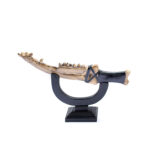
If the prop is part costume piece and part collectible, display storage can be the sweet spot. A mounted setup on a bedroom or game-room wall keeps it visible, protected from floor clutter, and ready for the next photoshoot. Just make sure the mount supports the weapon evenly rather than pinching one weak point.
Clean before you store
This step gets skipped all the time, and it’s one of the easiest wins.
Before putting any cosplay weapon away, wipe it down. Convention dust, hand oils, makeup, body paint, fake blood, hairspray residue, and outdoor grime all sit on the surface if you don’t remove them. Over time, that buildup can stain finishes or break down coatings.
Use a dry microfiber cloth first. If the material allows it, follow with a lightly damp cloth and then dry it fully. Don’t soak anything, and don’t use harsh cleaners unless you know the finish can handle it. For painted props, gentler is better. Scrubbing usually does more harm than the original dirt.
Check joints, straps, wrapped grips, and glued decorations while you clean. A tiny crack or loose fitting is much easier to fix now than the night before a convention.
Use padding, not pressure
Good storage is about support. Bad storage is about compression.
If you’re using a shelf, line it with a soft barrier so painted or polished surfaces don’t rub against hard wood or metal. If you’re putting props into bins or cases, wrap them individually with soft fabric, foam sheets, or other non-abrasive padding. Avoid packing them so tightly that the guard, blade edge, or decorative spikes are always under pressure.
This is especially important for anime and gaming props with dramatic shapes. The bigger and flashier the build, the more likely it has stress points. Winged guards, jagged blade profiles, spiked pommels, and layered add-ons are the first things to snap when storage gets lazy.
A lot of collectors make one mistake here: they use whatever is handy and forget that some materials can transfer color, shed fibers, or trap moisture. Clean soft cloth is safer than random printed fabric or old packing material you can’t identify.
Cases, racks, bins, and wall mounts
There isn’t one perfect answer for every setup. It depends on whether your prop is for active cosplay, long-term display, or backup storage between events.
Cases are great if you travel often and want one solution for both transport and storage. A padded case protects against dust and accidental bumps, but it only works if the inside fit is right. Too loose and the weapon shifts around. Too tight and delicate details get crushed.
Bins can work for smaller daggers, accessories, and disassembled props, but they need organization. Tossing multiple pieces into one plastic tub is how finishes get scratched and straps get tangled. Separate layers or sleeves help a lot.
Racks and wall mounts are strong options for pieces you want to display and access easily. They also help keep your room from turning into a prop graveyard. If you go this route, make sure each mount is sized for the item’s weight and shape. A mount that looks cool but puts stress on one narrow point is not actually helping.
For collectors building a real fandom wall, this is where style and practicality can meet. A clean display setup keeps your favorite weapons ready for photos, content, or the next convention run while protecting them better than floor storage ever will.
How to store cosplay weapons in small spaces
Not everyone has a prop room, and that’s fine. You just need smarter use of the space you do have.
Under-bed storage can work for slimmer swords and staves if they’re laid flat in protective sleeves and the container is rigid enough to prevent crushing. Closet top shelves are useful for lightweight foam pieces as long as nothing heavy gets stacked on them. Behind-door wall hooks can help with lighter props, but only if they hold the weapon securely and don’t bend it over time.
If a weapon breaks down into sections, store each piece wrapped and labeled. That saves space and reduces stress on connection points. It also makes pre-con packing way less chaotic.
Small-space storage is really about avoiding hidden damage. If you have to tuck a prop away, make sure you can still retrieve it without dragging it past shoe racks, winter coats, or heavy storage boxes.
Common storage mistakes that wreck props
The biggest mistake is storing cosplay weapons in hot or humid spaces. The second is stacking other stuff on top of them. After that, it’s usually a mix of bad angles, no padding, and not cleaning first.
Another common problem is treating all props like they’re equally durable. A foam greatsword, a resin dagger, and a bamboo katana-style training piece do not want the same storage setup. One can bend, one can chip, and one can react to damp conditions. It depends on the build.
The last mistake is forgetting that display is storage too. If your weapon lives on a wall, near a window, above a heater, or somewhere it gets knocked every day, it’s not safely stored just because it looks cool.
Build a storage setup you’ll actually use
The best system is the one you can stick with after every con, photoshoot, or room reorganization. If your storage plan is too complicated, props end up in corners again.
Start simple. Give each weapon a home. Keep heavy pieces separate from delicate ones. Store them indoors, out of sunlight, with support instead of pressure. If you collect across materials and fandoms, a mix of wall display and protected shelf storage usually gives the best balance between protection and presentation.
For fans who treat their gear like part cosplay, part collection, that balance matters. Your weapon prop should look just as sharp off the convention floor as it does in full costume. Store it like it belongs in your lineup, not like leftover gear from the last event.